
Landscape Office: A Modern Approach to Workplace Design
What Is a Landscape Office?
A landscape office is a workplace design approach that organizes workstations, circulation, collaboration areas, and supporting facilities within an open and flexible environment. Unlike a conventional office layout with fixed partitions, landscape office design creates a more connected workplace while still supporting different activities.
The concept originated from Bürolandschaft, or “office landscape,” which emerged in Germany during the 1950s. Today, it has evolved into a modern workplace strategy that balances collaboration, concentration, privacy, comfort, flexibility, and operational efficiency.
Key Elements of Landscape Office Design
An effective landscape office design should reflect how employees work. Rather than simply placing desks in one large room, businesses should create zones for specific activities.
Important elements include:
- Open workstations for individual and team-based work
- Collaboration areas for informal discussions
- Meeting rooms for structured or confidential conversations
- Focus areas for tasks requiring concentration
- Breakout spaces for informal interaction and relaxation
- Flexible furniture that supports changing business needs
- Acoustic solutions to reduce noise and distractions
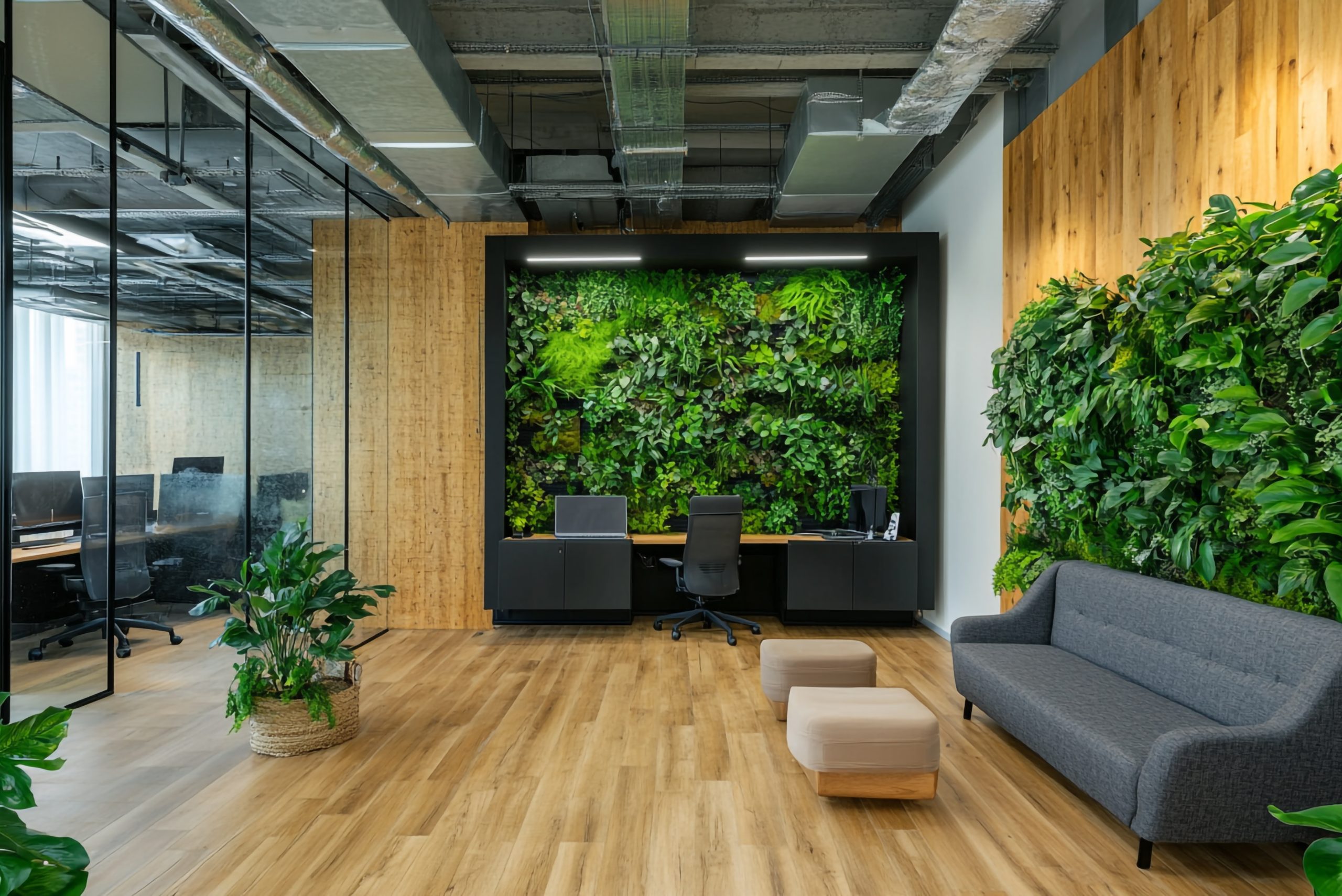
- Natural elements such as plants, daylight, and natural materials
This approach keeps the office visually open without forcing every activity to take place in the same environment.
Landscape Office vs. Open Plan Office
Although both concepts may use an open floor plan, a landscape office is more comprehensive than a basic open plan office. A conventional open plan office often focuses on removing partitions, while landscape office design considers employee movement, communication patterns, zoning, furniture, acoustics, and work requirements.
A completely open office can create challenges related to noise and distraction. Therefore, modern office planning should not focus only on maximizing openness. The goal is to create a balanced environment that supports both collaboration and concentration.
Supporting Modern Workplaces
Employees may need different environments throughout the day. They may require a quiet area for focused work, a collaborative space for team discussions, or an informal setting for creative activities.
A well-planned office landscape can support these needs through:
- Focus zones for individual work
- Team zones for collaboration
- Meeting spaces for formal discussions
- Informal areas for spontaneous communication
- Flexible workstations for changing team structures
This flexibility helps businesses adapt to organizational growth and evolving work practices.
Furniture and Biophilic Elements
Furniture determines whether a landscape office is genuinely flexible. Businesses should consider modular workstations, ergonomic chairs, height-adjustable desks, acoustic panels, collaborative tables, meeting pods, and mobile furniture.
Natural elements can also improve the workplace experience. Plants, daylight, natural materials, and views of greenery can support a more comfortable and engaging environment. These features should be integrated as part of a broader modern office design strategy rather than treated as decoration.
Source:


